
The secret to strong teams? Learning how to fight right
The best teams, like the best couples, don’t avoid fights. They learn how to fight well.

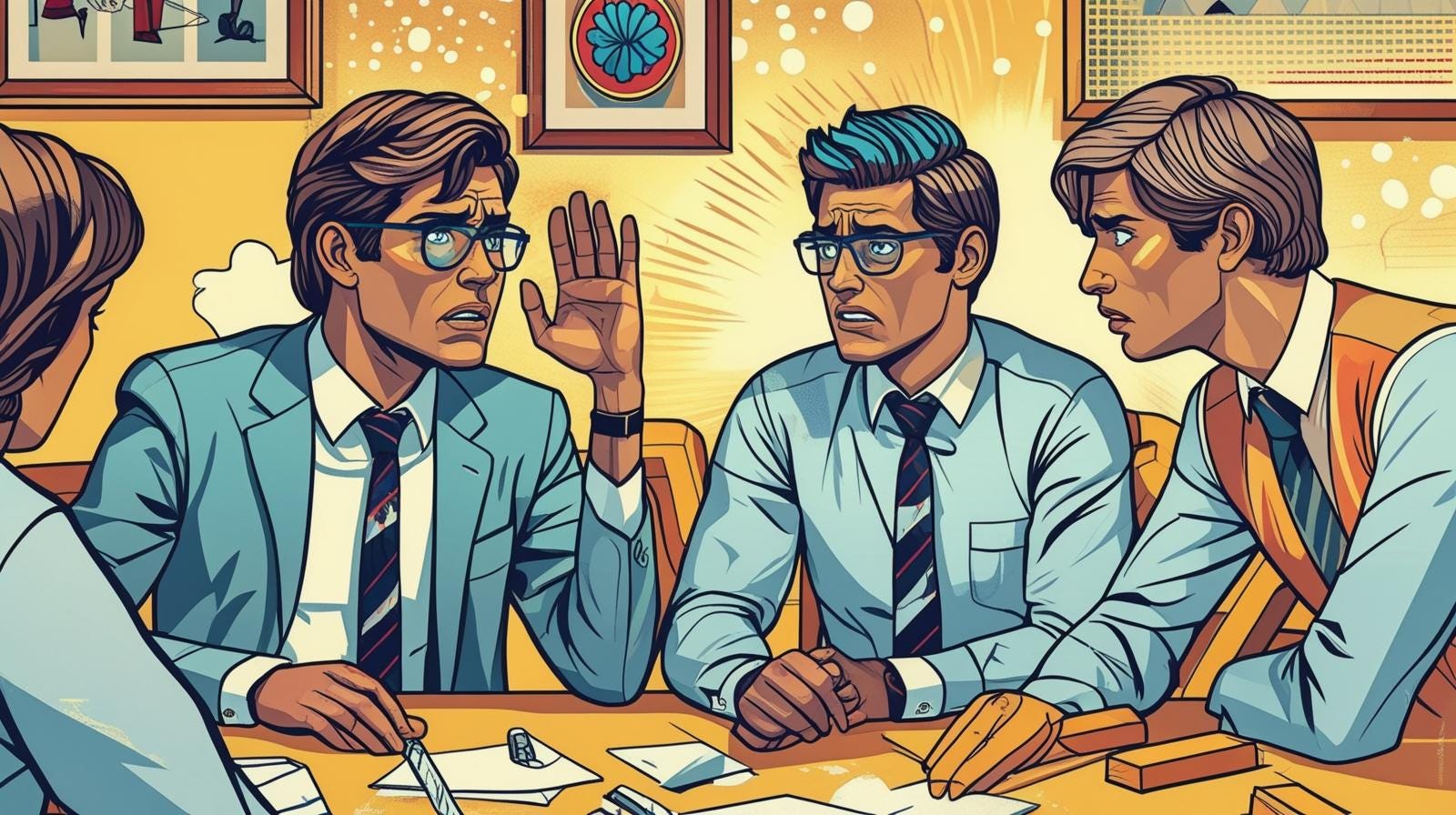
When avoiding conflict becomes the real problem
Early in my career, I thought being agreeable was a strength. I took on extra work without protest, accepted others’ ideas without question and rarely spoke up when I disagreed. This “strategy” was grounded on the need to be liked and avoiding being labelled as “difficult.”
But the more I avoided conflict, the more quietly resentful I became. I learned the hard way that the absence of conflict does not equate to harmony and rather simply suppression.
What the research says about “good” conflict
Organisational psychologists like Adam Grant have long argued that conflict, when done right, is essential for innovation and trust. In his book Think Again, Grant notes that “disagreeable givers”, people who challenge ideas because they care, are often the unsung heroes of progress. They create psychological friction that strengthens decisions, not weakens them.
Similarly, research from Stanford Graduate School of Business and Harvard Business Review finds that teams engaging in task conflict (disagreements about ideas, methods or strategies) perform better than those that prioritise politeness. The key, though, is emotional control. When disagreement stays focused on the issue rather than the individual, it sharpens thinking without eroding trust.
The marriage analogy: why “fighting well” matters
Borrowing from literature found on relationships to help illustrate the point, it has been widely found that couples who thrive and those who fall apart isn’t whether they fight or not, but rather it is how they fight. Healthy couples challenge each other’s perspectives, express frustrations early and focus on resolution instead of blame.
The same principle applies in teams. Productive conflict is like emotional ventilation - it releases pressure before it turns toxic. Avoidance, on the other hand, builds silent resentment that eventually leaks out as sarcasm, passive aggression or quiet disengagement.
The two faces of conflict
As can be expected, not all conflict is created equal. In the workplace, conflict typically falls into two categories:
Task Conflict (Productive)
This is disagreement about ideas, priorities or strategies i.e. what should be done or how to do it. It’s healthy because it challenges assumptions and encourages critical thinking. For example, when two lawyers debate on how to draft a clause or two designers argue about layout options, they’re engaging in task conflict. If managed with curiosity and respect, it strengthens collective outcomes.Relationship and Status Conflict (Destructive)
This happens when disagreements turn personal i.e. when the focus shifts from what’s right to who’s right. Ego, insecurity and hierarchy drive these clashes. Once a conversation moves from substance to status, it stops being about ideas and starts being about identity. HBR calls this “the tipping point from productive friction to personal friction.”
The distinction between the two conflicts is crucial. Conflict over ideas builds teams; conflict over identity breaks them.
Learning to disagree without being disagreeable
Adam Grant often says that “strong teams are made of people who trust each other enough to argue.” The goal isn’t to avoid tension but to make it safe. That means creating psychological safety where people can challenge authority or question ideas without fear of retaliation.
Here are some practical ways to make conflict work for you:
Frame disagreements as joint problem-solving. Instead of “I disagree,” try “Let’s test another angle.” This shifts focus from ego to exploration.
Disagree early and respectfully. Suppressing opinions until frustration builds leads to explosions later.
Separate person from idea. Criticise the argument, not the individual. “I see a risk with this approach” is very different from “You’re wrong.”
Invite dissent intentionally. Adam Grant suggests appointing a “devil’s advocate” in meetings to normalise challenge. This reduces the emotional charge around disagreement.
These small behavioural shifts turn friction into forward motion.
The cost of harmony
A 2020 Stanford study on team dynamics found that groups valuing “smooth interactions” over open debate tend to underperform over time.
Conflict avoidance can also mask deeper power imbalances. In many organisations, junior staff hesitate to challenge senior voices, creating a false consensus. Everyone appears aligned, but decisions are built on unspoken discomfort. In the short term, this feels efficient; in the long term, it’s costly.
From fear to constructive friction
My relationship with conflict has evolved. I’ve learned that voicing disagreement doesn’t make me unlikeable. In fact, it makes me credible.
Like a strong relationship, a strong team doesn’t fear tension; it uses it to grow closer. If couples who thrive are those who learn to fight well, then teams that thrive are those that learn to debate well.
Conclusion: the art of fighting well
The healthiest workplaces, like the healthiest relationships, don’t blindly pursue peace at all costs. They value candour over comfort. They understand that friction, when managed with respect, produces light, not heat.
Conflict isn’t the enemy of collaboration but in fact avoidance is. The question a leader must ask themselves is not whether your team fights, but whether it fights well.